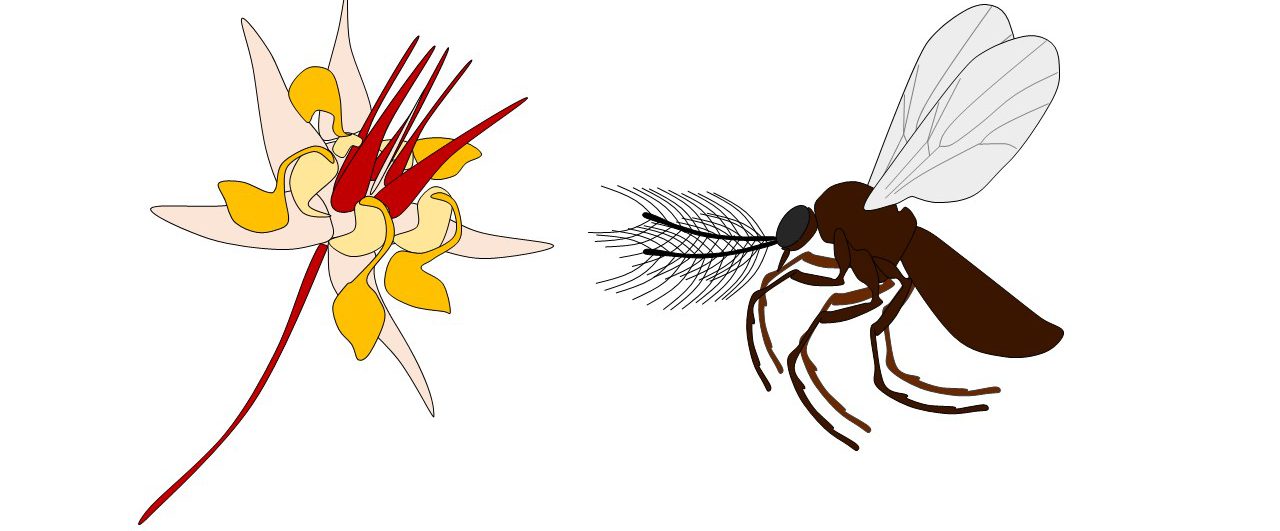
There are many ways to interpret sustainability. For example, sustainable cacao production could mean that the production can be kept at an economically viable level for a long time. Alternatively, it could mean that cacao is grown in a way in which the local ecosystems and biodiversity are not harmed. For cacao production, surprisingly, the ways to promote both economic and ecological sustainability can overlap and go hand in hand.
The answer to the question “how can cacao be grown in a sustainable way” is complex. Depending on the continent and the local conditions such as climate, soil type and nutrients, a different plantation management strategy may be needed. However, there is one practice that is beneficial for both economic and ecological sustainability, regardless of where it is applied: the use of shade trees.
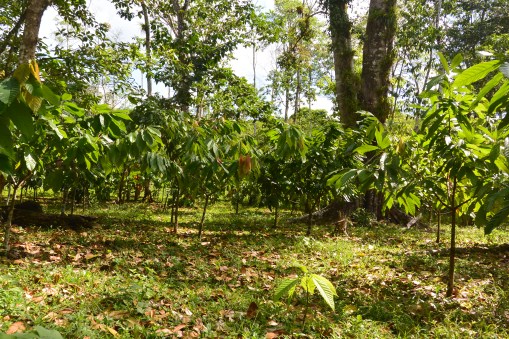

Cacao is an understorey tree by nature; naturally growing underneath a canopy of taller trees. Since cacao is adapted to grow in shade, it gets in a state of stress when growing in full sun without shade trees. Stressed out plants try to produce as much offspring as possible, to leave their genes behind before possibly dying. Cacao is no exception to this; it is well-known that cacao trees produce a higher yield when grown in full sun than when grown underneath shade trees. However, those full sun grown cacao trees will eventually succumb to the stress and after about ten years, they will stop producing economically viable levels of yield. Cacao yield also drops in heavily shaded plantations but for cacao trees grown under a shade canopy of up to 30-40% , high yield levels can be maintained. In those shaded plantations, called agroforestry systems, the shade trees contribute to the health of the cacao trees. At the same time they contribute to the health of the ecosystem by promoting biodiversity in the plantation and by storing carbon. When carefully selected, the shade trees can also provide an important source of additional income for cacao farmers, in the form of timber or fruit production. Additionally, nitrogen-fixing trees can add nutrients to the soil, reducing the need for fertilisers. On the other hand, the shade canopy can be an important food or nesting resource for the local biodiversity (birds, bats, insects, amphibians and so on), especially when local tree species are used. In that sense, using shade trees in cacao plantations is a win-win-win-win… strategy.
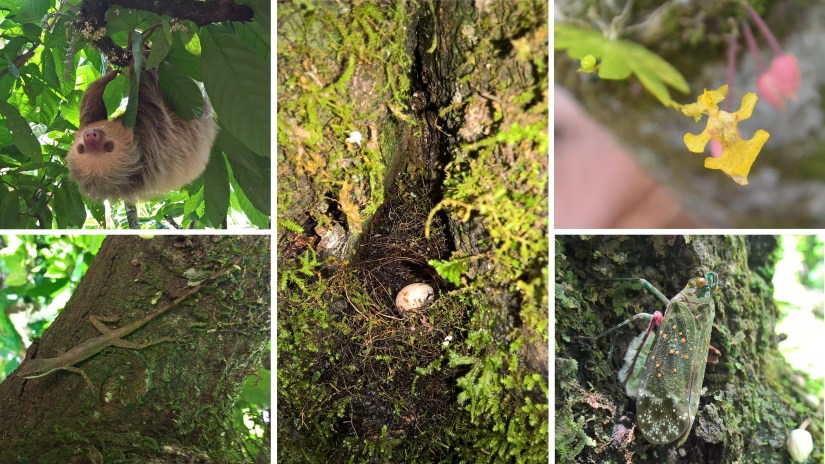
In the long run and at landscape level, it is important that aging cacao plantations that become less productive are rejuvenated rather than being cut down and re-established elsewhere. Since new cacao plantations are often established inside previously forested areas, plantation rejuvenation can help to avoid the deforestation of forest remnants in cacao producing zones. Agronomic models based on local conditions can provide insight in what the optimal time is for farmers to rehabilitate their plantation, for example by planting a new generation of cacao trees underneath the old cacao trees and shade canopy combined with adequate use of fertilisers. The old cacao trees can be removed when the new generation of trees matures and needs less shade. This way, a large fraction of the landscape can be maintained in an (agro)forested state. This is beneficial for biodiversity preservation and climatic buffering of the tropical cacao growing regions and especially important in light of global change.
 Cacao Pollination (CACPOL)